Why Air Sealing Matters More Than R-Value in Commercial Buildings
R-value measures resistance to heat flow, but it assumes ideal conditions. In commercial construction, air leakage often has a bigger impact on real-world efficiency than insulation levels alone.
When evaluating insulation, most people focus on R-value, which measures resistance to heat flow — but it doesn't tell the full story of how a building structure actually performs. In commercial construction, air leakage often has a greater impact on efficiency than insulation levels alone.
For full air sealing, NFW recommends spray foam insulation and roof coatings together — see how spray foam improves commercial building envelope performance for the fuller picture of why the two pair well.
What R-Value Actually Measures
R-value indicates how well a material resists heat transfer through conduction. Higher R-values mean better insulation performance on paper.
However, R-value assumes ideal conditions. It doesn't account for air movement, installation gaps or real-world building conditions. If air is moving freely through or around insulation, the effective performance drops significantly.
This is why buildings with high R-value insulation can still experience heat loss, drafts and inconsistent temperatures — and it's why Alberta's RSI minimums are set separately for each assembly rather than as one blanket number.
The Hidden Impact of Air Leakage
Air leakage occurs when outside air enters the building and conditioned air escapes. This happens through small gaps, cracks and joints in the building envelope. Uncontrolled air leakage can account for a significant portion of energy loss in buildings — and the specific air barrier standard Alberta's building code actually cites is narrower and more precise than the generic number most contractor sites repeat.
In commercial spaces, this leads to:
- Increased heating and cooling costs
- Uneven indoor temperatures
- Greater strain on HVAC systems
- Moisture movement within walls and ceilings
Even small openings can have a large cumulative effect across a building.
Why Air Movement Reduces Insulation Performance
Insulation is designed to slow heat transfer, but it cannot stop moving air. When air passes through or around insulation, it carries heat with it. This process, known as convective heat transfer, bypasses the insulation entirely. As a result, the effective R-value drops, sometimes dramatically. A building with strong air sealing and moderate insulation often performs better than one with high R-value insulation and poor air control.
How Spray Foam Solves Both Problems
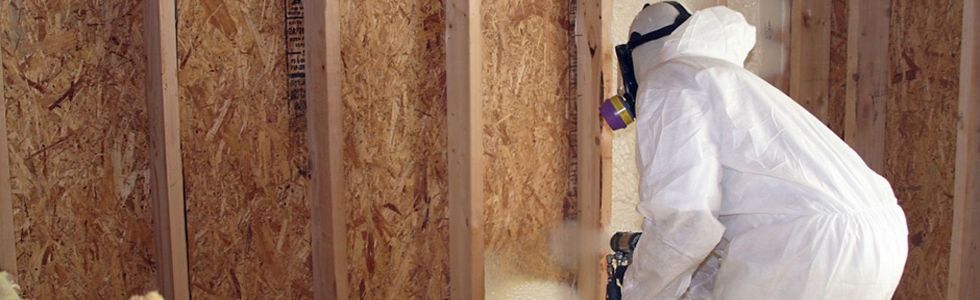
Spray foam stands out because it addresses both insulation and air sealing at the same time. When applied, it expands to fill gaps and adhere to surfaces, creating a continuous barrier that also insulates to prevent thermal transfer.
Focusing only on R-value can lead to underperforming buildings. A more effective approach is to prioritize air sealing first, then ensure adequate insulation levels — a sequencing that matters most in steel-clad commercial structures, where metal building insulation has to insulate and air-seal in the same pass rather than as two separate systems.
This combination supports:
- Better energy efficiency
- Improved indoor comfort
- Reduced moisture-related issues
- Longer-lasting building performance
Increase Air Sealing Through Spray Foam Insulation
For commercial properties, this translates directly into lower operating costs and fewer maintenance issues. At NFW, we design insulation systems for real Alberta conditions, from deep winter cold through hot summer stretches.
Contact our team of spray foam insulation contractors serving Red Deer and Central Alberta for your commercial roof insulation and coating projects — 403-350-2720.