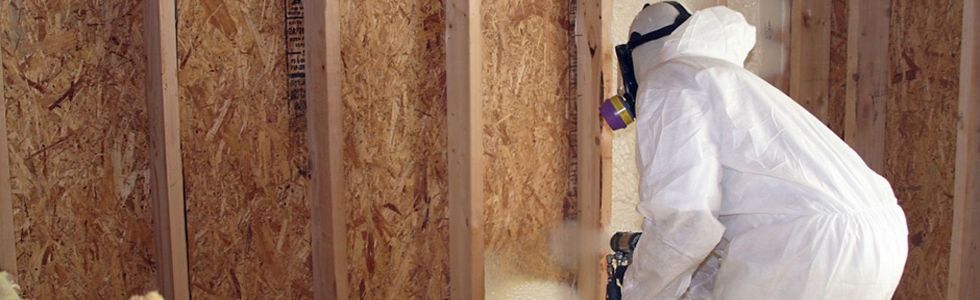
Industrial Buildings Need Insulation & Air Sealing
Large wall assemblies, expansive roof systems and mechanical penetrations all create opportunities for older industrial buildings to lose far more energy than owners realize.
Industrial buildings are built to withstand demanding conditions, but many older facilities lose far more energy than owners realize. Large wall assemblies, expansive roof systems, loading bays and numerous mechanical penetrations all create opportunities for heated or cooled air to escape.
While insulation is often viewed as the primary solution, air sealing is equally important. Together, these two elements form the building envelope, helping industrial facilities operate more efficiently while protecting equipment, inventory and employees from Alberta's changing climate.
Air Leakage Is Often the Hidden Problem
Many industrial buildings contain small gaps that go unnoticed for years. Roof-to-wall connections, service penetrations, expansion joints and overhead door openings all allow conditioned air to escape while outdoor air enters the building.
According to Natural Resources Canada, uncontrolled air leakage can significantly increase heating and cooling demands because HVAC equipment must continually condition replacement air entering the building. Even relatively small gaps can add up across a large industrial facility.
Unlike traditional insulation products, closed-cell spray foam expands after application, sealing irregular surfaces while providing continuous insulation. This combination reduces uncontrolled air movement without requiring separate air barrier systems — though it's worth knowing exactly what Alberta's own air barrier standard requires, since it is a material criterion, not the assembly one.
Better Insulation Helps Protect More Than Energy Bills
Industrial insulation affects much more than utility costs. Temperature fluctuations can impact manufacturing processes, stored materials, electronic equipment and employee comfort. Buildings with poor insulation often experience cold work areas during winter, excessive heat gain during summer and condensation on steel surfaces when warm, humid air contacts cold metal.
Condensation is more than an inconvenience. Over time, moisture can contribute to corrosion, mould growth, insulation damage and premature deterioration of building components.
By creating a continuous thermal barrier, spray foam helps maintain more consistent interior temperatures while reducing the likelihood of condensation forming within the building envelope. Part 3 commercial and industrial buildings in Red Deer's climate zone actually carry higher minimum R-values than the house next door — see the exact NECB wall and roof targets.
A Stronger Building Envelope Supports HVAC Performance
Heating and cooling equipment performs best when the building envelope does its job. If conditioned air is constantly escaping, mechanical systems must run longer and cycle more frequently to maintain indoor temperatures, increasing wear on HVAC equipment while consuming more energy throughout the year.
Improving insulation and air sealing allows existing heating and cooling systems to operate more efficiently because less conditioned air is being lost through the building envelope. Employees also benefit from more consistent temperatures and fewer drafts throughout the workspace.
Designed for Alberta's Industrial Sector
Industrial facilities across Central Alberta face demanding operating conditions, from extreme winter temperatures to hot summer afternoons. Choosing the right insulation system helps protect both the building and the people working inside it.
At NFW Foam, we provide industrial insulation for warehouses, manufacturing facilities, equipment shops, agricultural buildings and other industrial properties throughout Central Alberta. Whether you're constructing a new facility or upgrading an existing one, we'll recommend insulation systems designed to improve energy efficiency, reduce air leakage and support long-term building performance.