Can Spray Foam Insulation Reduce Noise in Your Home?
Spray foam is not a soundproofing product — but sealing the air gaps that carry sound genuinely reduces noise between rooms and from outside. Here's the honest version of the claim.
Most homeowners think of insulation as a way to regulate temperature, reduce energy bills and increase comfort year-round. Spray foam does that. But it's worth being precise about a claim that gets repeated a lot in this industry: spray foam does not soundproof a home in the formal, tested sense — and it's worth knowing what it actually does instead, because that's still a real benefit.
Does Spray Foam Work as Soundproofing?
Soundproofing is a specific, measurable claim — it's rated by Sound Transmission Class (STC), a lab-tested number for how much sound a wall assembly blocks. Independent testing by the National Research Council of Canada found that swapping glass fibre batt for spray foam in a wall assembly actually produced a 4 to 6 STC loss, not a gain. So if a contractor tells you spray foam soundproofs a room, that specific claim doesn't hold up against the Canadian research.
What spray foam genuinely does is seal the small gaps and penetrations — around electrical boxes, plumbing runs, rim joists, and unsealed cavities — that let airborne noise leak between rooms and in from outside. Sealing those flanking paths produces a real, noticeable improvement in how much noise reaches you, even though it isn't the same thing as raising a wall's STC rating. Open-cell spray foam, being softer and more absorptive, tends to do the better job of dampening airborne sound like voices or music.
How Air Sealing Helps With Noise
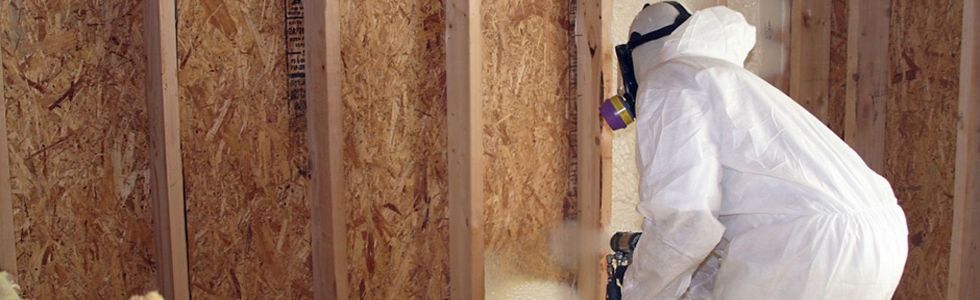
Unlike traditional batt insulation, spray foam forms a dense barrier that expands on contact and fills the cracks and gaps that would otherwise let noise travel through a wall assembly — the same gaps Alberta's air barrier code is written to close, so quieter rooms are a side effect of doing that sealing properly. That closes off pathways for airborne noise — conversations, TVs, a barking dog — and can take some edge off structural noise like footsteps or plumbing, mostly by tightening up the penetrations those sounds travel through.
Closed-cell foam is denser and is generally chosen for thermal performance and moisture control rather than as a sound-control product, though sealing the gaps still helps.
Why a Quieter Home or Business Matters
Sound may not always seem like a pressing concern, but consistent indoor noise can affect sleep quality, focus and comfort over time. In homes, this becomes especially relevant in multi-storey layouts, basement suites, home offices and shared bedrooms. For businesses, reducing noise transfer through gaps can improve privacy and focus for staff and clients.
Spray foam won't make a home silent, and it isn't a substitute for a dedicated sound-rated wall assembly if that's genuinely what a project needs. What it can do is meaningfully reduce the everyday noise that travels through the ordinary gaps most homes and buildings have.
Where Air Sealing for Noise Makes the Most Difference
In residential homes, we often recommend a well-sealed envelope in bedrooms, media rooms, laundry rooms and shared interior walls. Clients frequently notice a real difference after attic insulation is updated, or once floor cavities between storeys are properly sealed.
In commercial spaces, this shows up in clinics, classrooms, co-working offices and customer-facing businesses like cafés or retail, where privacy and a calmer environment matter.
NFW Foam works with property owners across Red Deer, neighbouring Blackfalds and Central Alberta to design insulation plans that solve more than one problem at once. If a quieter home or business is something you've been thinking about, let's talk about whether air sealing with spray foam is the right fit — we'll walk you through what it can and can't do before you invest.