
Commercial Insulation
A Part 3 building is held to a different standard than the house next door. Under NECB 2020 in Zone 7A, walls are capped at a maximum overall U of 0.215 and roofs at 0.121 — effective values well above what Part 9 asks of a dwelling. These guides cover the commercial envelope as it is actually built and repaired: air barrier continuity, thermal bridging at the slab edge and the parapet, and where the real losses are in an occupied building nobody wants to shut down. With industrial vacancy tight across Central Alberta, most of this work is improving what is already standing rather than building new.
Why Air Sealing Matters More Than R-Value in Commercial Buildings
R-value measures resistance to heat flow, but it assumes ideal conditions. In commercial construction, air leakage often has a bigger impact on real-world efficiency than insulation levels alone.
How Spray Foam Improves Commercial Building Envelope Performance
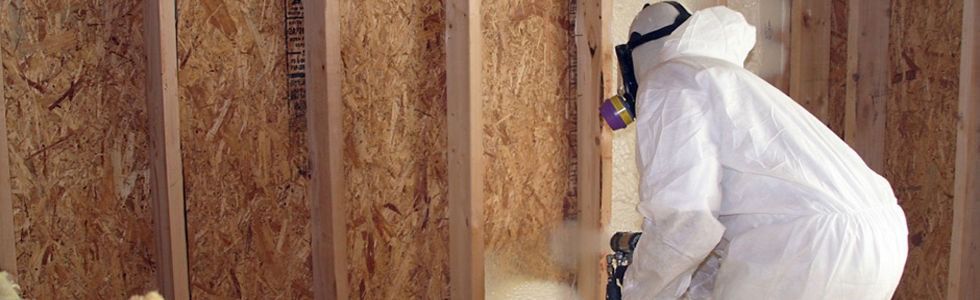
A commercial building's performance is largely determined by its envelope. Spray foam combines insulation, air barrier and vapour retarder into one continuous layer to close the gaps other systems leave open.
Book an Estimate.
Reading about a problem you're having right now? Skip the article — book an estimate or give us a call.
 Real NFW work