
Buyer’s Guide
Insulation is sold with a lot of numbers attached, and not all of them survive contact with a Canadian test report. Closed-cell spray foam is often advertised at R-7 per inch; the long-term thermal resistance values published for the Canadian market sit closer to R-5.2 to R-5.9. These guides compare the real materials — closed-cell, open-cell, fibreglass batt, mineral wool — on the terms that actually matter in this climate: aged R-value, permeance, air sealing, and what each one does when it gets wet. Written to help you ask a contractor better questions, including the ones we would rather you asked us.
Can Spray Foam Insulation Get Wet?
The answer depends on the type of spray foam and how much water it's exposed to. Here's how closed-cell and open-cell foam actually respond to moisture.
Canadian-Made Insulation & Service
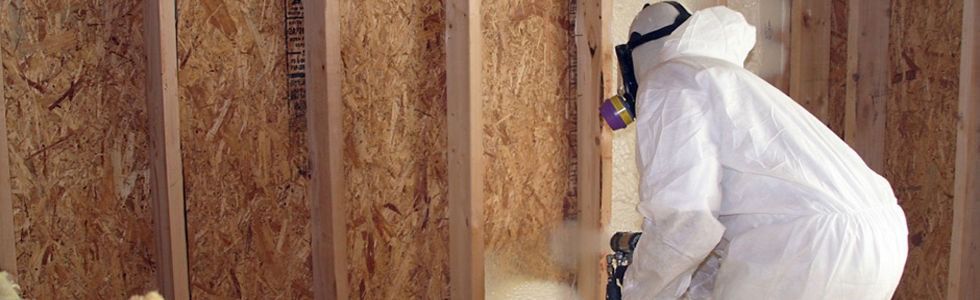
NFW's core material toolkit is Genyk spray foam, Canadian-owned and Canadian-made, and Johns Manville Fiberglass, manufactured in Innisfail, Alberta.
NFW in Alberta Installs Johns Manville Insulation
NFW installs Johns Manville Fiberglass, a locally manufactured batt made right in Innisfail, Alberta, alongside Genyk spray foam across Central Alberta homes and buildings.
How Much Does It Cost to Spray Foam 1,000 Square Feet?
Spray foam pricing is generally quoted per board foot. Here's how open-cell and closed-cell pricing models compare, and what actually drives the total for a 1,000 sq ft project.
What Is the Difference Between Spray Foam Insulation and Fibreglass?
Spray foam and fibreglass are the two most commonly used insulation materials in Alberta. Here's how they actually compare on R-value, moisture resistance and installation.
Book an Estimate.
Reading about a problem you're having right now? Skip the article — book an estimate or give us a call.
 Real NFW work